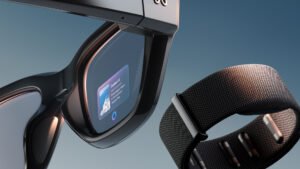
Meet Android XR: Google’s brand-new extended-reality operating system, purpose-built to power the coming wave of immersive devices — full mixed-reality headsets like Samsung’s Galaxy XR, and the ultra-lightweight AR/AI glasses we’ve all been waiting for.
At its core, it’s still Android — that same familiar, battle-tested foundation thousands of developers already know inside out — but now supercharged with deep Gemini AI integration, spatial computing primitives, OpenXR support, and a unified architecture designed to scale across form factors.
This is the Google/Samsung/Qualcomm dream team effort: an open, multi-manufacturer ecosystem that finally treats XR as a serious, long-term platform rather than another walled-garden experiment.
Why This Actually Matters (Consumer + Dev Lens)
For everyday users who want tech that disappears into life
Imagine slipping on a pair of stylish glasses (think Gentle Monster or Warby Parker collabs) that quietly serve glanceable, context-aware info: live navigation arrows on the sidewalk, real-time translation subtitles during conversations, or Gemini pointing out exactly where you left your keys with a visual overlay.
No more fishing for your phone. Just subtle, helpful digital layers on top of reality — the way notifications should have always worked.
source: Android
For creators of immersive, location-aware experiences
Android XR unlocks lightweight AR overlays that feel native to the physical world: subtle information anchors, interactive museum guides, live performance cues, or contextual gaming elements that react to your exact position and gaze.
It’s less about strapping on a full headset and more about augmenting reality in ways that enhance — not replace — what you’re already doing.
source: Android
For developers (the real magic)
This is where Android XR shines brightest. You’re not learning a brand-new, closed XR SDK from scratch.
You get the full Android toolchain you already use: Android Studio, Jetpack Compose, ARCore, familiar Kotlin/Java, and seamless Play Store distribution. Plus native OpenXR support right out of the box, so your Unity/Unreal projects, WebXR experiences, and existing spatial prototypes port over with dramatically less friction.
2D apps run out of the box (with many getting beautiful spatial upgrades via Gemini), while XR-native apps can leverage gaze, gesture, hand-tracking, and multimodal Gemini prompts.
The barrier to entry? Lower than it’s ever been for mainstream AR glasses development. Build once, reach headsets and glasses across multiple hardware partners.
That’s the kind of ecosystem leverage Android has always delivered — now pointed at spatial computing.
For anyone watching the XR industry
Unlike previous efforts (Glass, Daydream), this feels different. Android XR isn’t locked to one vendor or form factor. It’s explicitly designed for a spectrum: heavy-duty MR headsets today (Galaxy XR launched in late 2025), lightweight AI glasses arriving in 2026, and everything in between from partners like XREAL, Sony, Lynx, and more.
Google is finally playing the long game — with serious silicon (Qualcomm Snapdragon XR), real AI muscle (Gemini-native), and an open platform philosophy.
Check out Android’s “Android Show | XR Edition” video on YouTube:
The Realistic Caveats
We’re still early.
- Consumer-grade, all-day AR glasses with bright, crisp displays are rolling out gradually (first models expected mid to late 2026).
- Battery life, thermal management, and weight remain real engineering challenges for truly comfortable, discreet wear.
- Privacy questions around always-on cameras and sensors are legitimate — Google will need strong, transparent controls to earn widespread trust.
- The app ecosystem is growing fast, but most experiences will need thoughtful XR adaptations to feel truly magical (the good news: Android compatibility gives a massive head start).
Looking Ahead
What makes Android XR genuinely exciting isn’t just the specs or the partnerships — it’s the promise that spatial computing could finally become ambient and universal, as smartphones did damn-near 20 years ago 👴.
An invisible, helpful layer of intelligence that travels with you, understands your context, and enhances the physical world without demanding your full attention.
If the hardware partners nail comfort, style, and battery life — and developers embrace the familiar Android foundation — Android XR could be the platform that finally makes AR glasses feel inevitable… and actually useful.
The future of computing isn’t in your pocket anymore. It might be sitting right on your face.